


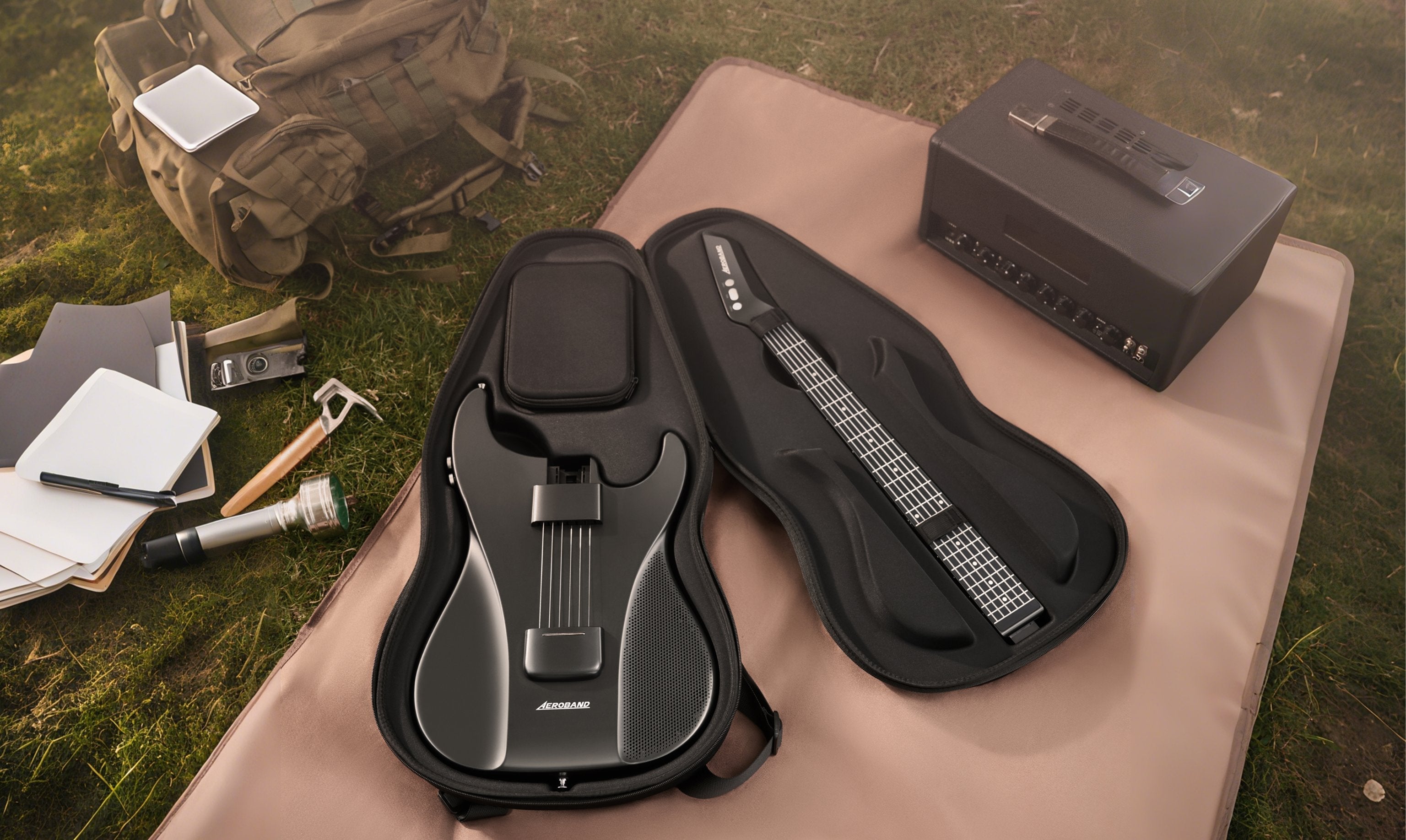
For decades, digital music production has been dominated by the piano keyboard. If you wanted to control a synthesizer or record virtual instruments into a computer, you had to learn to play keys. This barrier frustrated many skilled guitarists who felt locked out of the electronic music world. Fortunately, technology has evolved. MIDI Guitars have emerged as a powerful solution, allowing players to translate their fretboard skills directly into digital data. This guide explains how these instruments work and why they are changing the landscape for modern musicians.

What Exactly Is a MIDI Guitar?
MIDI (Musical Instrument Digital Interface) is not sound itself; it is a set of instructions. When you press a key on a synthesizer, it sends a message saying "play this note at this volume." A standard electric guitar sends an analog audio signal—a wave of sound.
MIDI Guitars bridge this gap. They detect what you are playing on the strings and instantly convert that physical vibration into a digital MIDI message. This means your guitar can trigger any sound imaginable. You can strum a chord and hear a grand piano, pluck a string and hear a violin, or play a solo that sounds like a vintage synthesizer. You are essentially using the guitar as a controller, just like a computer mouse or a keyboard.
Why Choose a Guitar Controller Over a Keyboard?
The primary reason is familiarity. Learning a new instrument takes years of practice. For a guitarist who has spent thousands of hours mastering how to hold a guitar and navigate the fretboard, switching to a piano keyboard feels like starting over.
Guitars offer unique expressive techniques that keyboards cannot easily replicate. Bending a string, adding vibrato, or sliding between notes are natural movements for a guitarist. A good MIDI controller captures these nuances. When you bend a string on your guitar, the synthesized saxophone sound bends with it. This allows for a more organic and human feel in electronic recordings, which can sometimes sound robotic when programmed on a grid.
The Two Main Types of Technology
Generally, the market is divided into two categories: pickup attachments and dedicated instruments.
Hexaphonic Pickups
These are specialized pickups that you install on your existing guitar. Unlike a standard pickup that captures all six strings at once, a hexaphonic pickup has a separate sensor for each string. This separation allows the computer to track each note individually. The advantage is that you can use your favorite guitar. However, they can be tricky to set up and may have slight latency (a delay between playing and hearing the sound).
Dedicated Digital Guitars
These are instruments built specifically for MIDI. They often look like a futuristic travel guitar with buttons or touch-sensitive fretboards instead of traditional strings. Because they are designed purely for digital data, they have virtually zero latency. They are often compact and perfect for producers on the move, but they lack the tactile feel of real strings.
How to Set Up Your MIDI Guitar for Recording
Once you have your hardware, integrating it into a studio is straightforward. Most modern controllers connect via USB directly to your computer.
Connect to a DAW
You will need a Digital Audio Workstation (DAW) like Logic Pro, Ableton Live, or GarageBand. Once connected, the software recognizes the guitar as a MIDI input device. You simply create a software instrument (MIDI) track—select a synthesizer, drum kit, or orchestral plugin—and start playing.
Adjust Sensitivity
You may need to calibrate the device to your playing style. If you pick the strings hard, you want the digital velocity to reflect that. Most devices come with companion software that lets you adjust sensitivity curves. This ensures that a ghost note doesn't trigger a loud drum hit, and a power chord sounds as aggressive as intended.
Can You Use It as a Travel Guitar?
Portability is a significant advantage of many dedicated MIDI instruments. Traditional guitars are bulky and fragile. In contrast, many digital controllers are headless and have small bodies, making them the ultimate travel guitar solution.
Because they generate sound digitally, they do not need a hollow body for resonance. You can plug headphones directly into the unit or your laptop and practice in a hotel room or on a plane without disturbing anyone. For songwriters who are constantly on the road, being able to lay down full drum, bass, and synth tracks using a device that fits in a backpack is a game-changer.
Learning How to Hold a Guitar for MIDI Tracking
Playing a MIDI instrument requires a cleaner technique than playing a standard analog guitar. Analog distortion can hide a lot of sloppy playing, but MIDI is unforgiving.
Muting is Critical
Any vibration can trigger a note. If your hand accidentally brushes an open string, the computer will record it. When learning how to hold a guitar for MIDI use, focus heavily on muting unused strings with your palms and fingers.
Precision Picking
You must also be precise with your picking hand. Light, accidental touches can be interpreted as separate notes. You may need to adjust your grip and attack to be more deliberate. It feels slightly different at first, but this discipline actually makes you a cleaner player on your traditional acoustic or electric instruments as well.
What to Consider Before You Buy an Electric Guitar Controller
If you are ready to buy an electric guitar with MIDI capabilities, there are several factors to weigh to ensure you get the right tool for your workflow.
Latency Tolerance
This is the most critical factor. Latency is the delay between plucking the string and hearing the synth sound. Dedicated digital instruments usually have better performance than pickup attachments. If you are playing fast solos, even a few milliseconds of delay can be frustrating.
Tracking Accuracy
Read reviews about how well the device handles chords. Some older systems struggled to track six notes simultaneously, resulting in "glitches" where notes would drop out. Modern systems are much better, but verify that the model you choose supports polyphonic pitch tracking if you plan to play complex jazz chords.
Compatibility
Ensure the device works with your operating system. Most are "plug and play" for Mac and Windows, but some require specific drivers. Also, check if it has standard 5‑pin DIN MIDI ports if you want to control hardware synthesizers without a computer.
Expanding Your Sonic Palette
The true power of MIDI Guitars lies in breaking genre boundaries. You are no longer limited to "guitar" sounds.
Layering Sounds
You can blend your standard guitar tone with a digital sound. Imagine playing a clean arpeggio that is doubled by a lush string section, or a distorted riff that is reinforced by a sub-bass synth. This allows a single guitarist to sound like a full band.
Drum Programming
You can even map your guitar strings to drum sounds. The low E string could be the kick drum, and the A string the snare. This allows you to tap out percussion rhythms using the fretboard, creating drum tracks that have a unique, syncopated feel that is hard to achieve on a keyboard or drum pad.
Conclusion
MIDI technology has democratized music production for guitarists. You no longer need to be a piano virtuoso to compose orchestral scores or techno beats. Whether you choose a retro-fit pickup or a specialized travel guitar controller, these tools open up a new universe of creativity. By adapting your technique and learning the basics of digital connection, you can transform your six-string skills into a limitless production powerhouse.
FAQs
Do I need a special amplifier for a MIDI guitar?
No. MIDI is data, not audio. You connect the controller to a computer, tablet, or hardware synthesizer. The sound comes from the software or synth, which you can then send to speakers or headphones. You do not use a standard guitar amp for the MIDI signal.
Can I play standard guitar sounds on a MIDI controller?
Yes, but it is a simulation. You can load a "virtual guitar" plugin in your software. However, if you want authentic guitar tone, it is usually better to use a real guitar. MIDI Guitars are best used for playing sounds that a real guitar cannot make, like pianos or flutes.
Is it hard to learn if I already play guitar?
The fretboard knowledge transfers 100%. You know the notes and the chord shapes. The learning curve comes from adjusting your technique. You need to play cleaner to avoid triggering accidental notes, but you do not need to learn a new interface like a keyboard.
Can I install a MIDI pickup on an acoustic guitar?
Yes, but it is less common. Most hexaphonic pickups are designed to fit under the strings near the bridge of a solid-body electric guitar. Installing one on an acoustic can be difficult due to the bridge height and body resonance, which might cause tracking errors.
Will a MIDI guitar work with an iPad?
Most modern MIDI controllers are "class-compliant (no drivers needed)," meaning they work with iOS devices via a standard USB adapter. This makes them incredibly powerful mobile production stations when paired with music apps like GarageBand on an iPad.


Share:
How to Record Realistic Drum Tracks in a Small Home Studio