


Every guitarist, from the bedroom strummer to the seasoned pro, knows the feeling. It's the dreaded plateau—that frustrating point where progress seems to grind to a halt. The scales feel stale, the chords are uninspired, and the passion that fueled your initial Guitar Learning journey begins to fade. The good news is that the problem isn't a lack of talent; it's a lack of fun. This guide will show you how to break through by gamifying your practice, turning repetitive drills into an engaging adventure.

Why Do We Hit a Learning Plateau?
A learning plateau is a natural part of acquiring any new skill, especially a complex one, such as learning how to play the guitar. The initial phase is filled with rapid, noticeable progress—you learn your first chord, then your first song, and the excitement is palpable. However, as you progress into the intermediate stage, the pace becomes more incremental and less obvious. This challenging phase is often why so many aspiring musicians struggle to continue their journey.
This is often where the routine becomes a rut. Practicing scales, memorizing theory, and drilling chord changes can lose their luster without clear, short-term goals. The joy of discovery is replaced by the feeling of a chore, and motivation wanes. Breaking through requires a fundamental shift in your approach to practice.
What Is Gamified Practice, and How Does It Help?
Gamified practice is the simple but powerful idea of applying game-like elements—such as points, levels, challenges, and rewards—to your practice routine. It transforms the learning process from a linear grind into an interactive and rewarding experience.
Instead of just "practicing scales," you're now "leveling up your speed stat." Instead of "drilling chords," you're "beating a timed boss battle." This simple reframing works wonders for motivation. It provides clear, measurable goals, offers instant feedback on your performance, and makes the repetitive tasks necessary for building muscle memory feel engaging and fun. It brings the "play" back into playing guitar.
Level Up Your Skills with These Gamified Exercises
Here are a few games you can play to target specific skills and break through your plateau.
Treat the metronome not as a practice tool, but as an opponent.
- The Goal: Reach a new "high score" (top speed) on a specific scale or lick.
- The Rules: Set your metronome to a slow, comfortable tempo. Play the exercise perfectly three times in a row. If you succeed, increase the speed by 2-4 BPM. If you make a mistake, you "lose a life" and must drop the tempo by 5-10 BPM. This turns the quest for speed into a strategic challenge.
Turn the often-tedious task of chord changes into a race against the clock.
- The Goal: Achieve a new personal best for clean chord changes in one minute.
- The Rules: Choose two chords that you struggle to transition between. Set a timer for 60 seconds and count how many clean, buzz-free changes you can make. Log your score in a notebook. The next day, your quest is to beat that score.
Train your ear and force yourself to think creatively on the fly.
- The Goal: Find the key of a random song and play along with it before it ends.
- The Rules: Use a radio or a streaming service's "random song" feature. The moment a new song begins, your mission is to identify its key by ear and then create a simple chord progression or lead line that fits. It's a fun, low-pressure way to apply music theory in real-time.
Choose the Right Gear to Keep Practice Fun
Sometimes, the friction in our Guitar Learning journey comes from our equipment. An uncomfortable or difficult-to-play instrument can kill a practice session before it even starts. Finding the best guitar for beginners is often about finding an instrument that is comfortable and inviting to play.
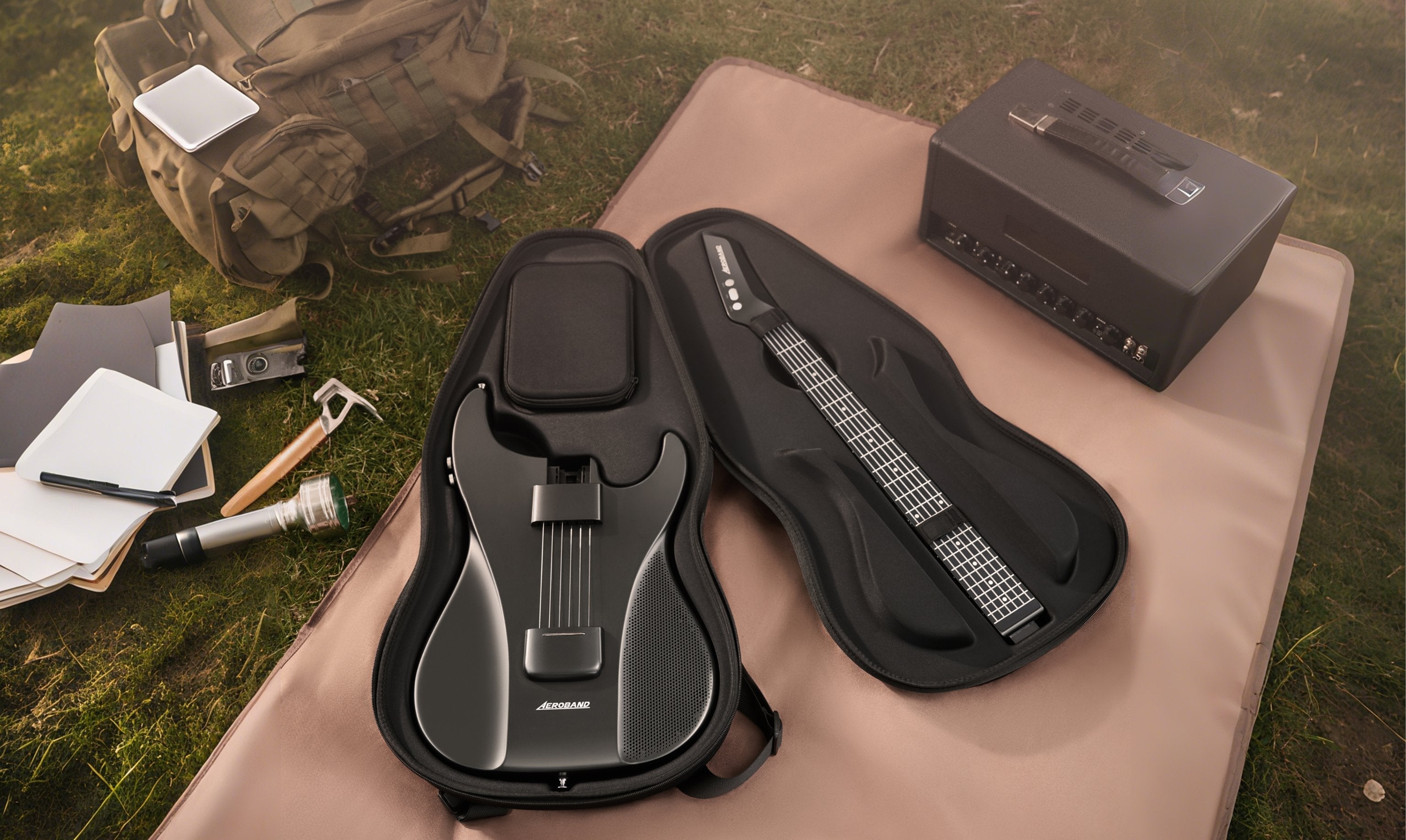
Ensure your guitar is properly set up with a comfortable action (the height of the strings off the fretboard). A good strap, a reliable tuner, and a comfortable pick can also make a surprising difference. Tools like the versatile AeroBand Guitar can also make practice more accessible and enjoyable anywhere you go. Removing these small barriers makes you more likely to pick up the instrument and play.
How Do You Track Your Progress and Stay Motivated?
A key part of any game is knowing the score. Tracking your progress is essential for staying motivated because it makes your incremental improvements visible.
Create a practice journal, but think of it as a gamer's logbook. Don't just write down "practiced scales for 15 minutes." Instead, write down your "high score" from the Metronome Boss Battle or your new record from the Chord Change Quest. Seeing those numbers climb over weeks and months is incredibly motivating.
You can also set tangible rewards for reaching certain milestones. If you can play your "boss battle" lick at a new target speed for three days in a row, treat yourself to a new pack of strings or that guitar pedal you've been eyeing.
Conclusion
This guitar learning plateau is actually not a wall; it is an indicator that you need to start doing things differently. By adding fun and achievable goals to your exercise, you can turn this activity into a passion rather than an obligation. Gamification is the secret ingredient that can help you reclaim your passion for playing guitar music. So why don't you pick a game and use your guitar today?
FAQ
I'm a complete beginner. Can I use these games?
Completely. These games can be scaled up for a player with any level of skill. For example, for the Chord Change Quest, a beginner can begin with a change from an E minor chord to a G major chord. For the Metronome Boss Battle, a beginner can begin with a four-note pattern on a single string. The principle is the same: set a baseline and try to beat it.
What if I'm not seeing progress even with these games?
Firstly, you want to make sure you’re paying attention to your scores and may be surprised to find progress is slower than you think it is. And if you do think you’re stuck, it can actually be a good idea to take a few days’ break so your mind and your muscles can just rest a bit. It may be a sign you need some lessons from a truly qualified guitar teacher with an eye for what you can do better.
Is it better to focus on one skill at a time or many at once?
A balanced approach is probably best. A good way to set up your practice is to spend a few minutes on a variety of "games" each day. For instance, you might spend 10 minutes on the Metronome Boss Battle for technique, 10 minutes on the Chord Change Quest for rhythmic skills, and then 10 minutes playing a song because you want to have fun with it.


Share:
Air Drums vs. Electronic Drum Pads: Which Portable Drumming Solution is Right for You?
10 Easy Guitar Songs for Beginners