


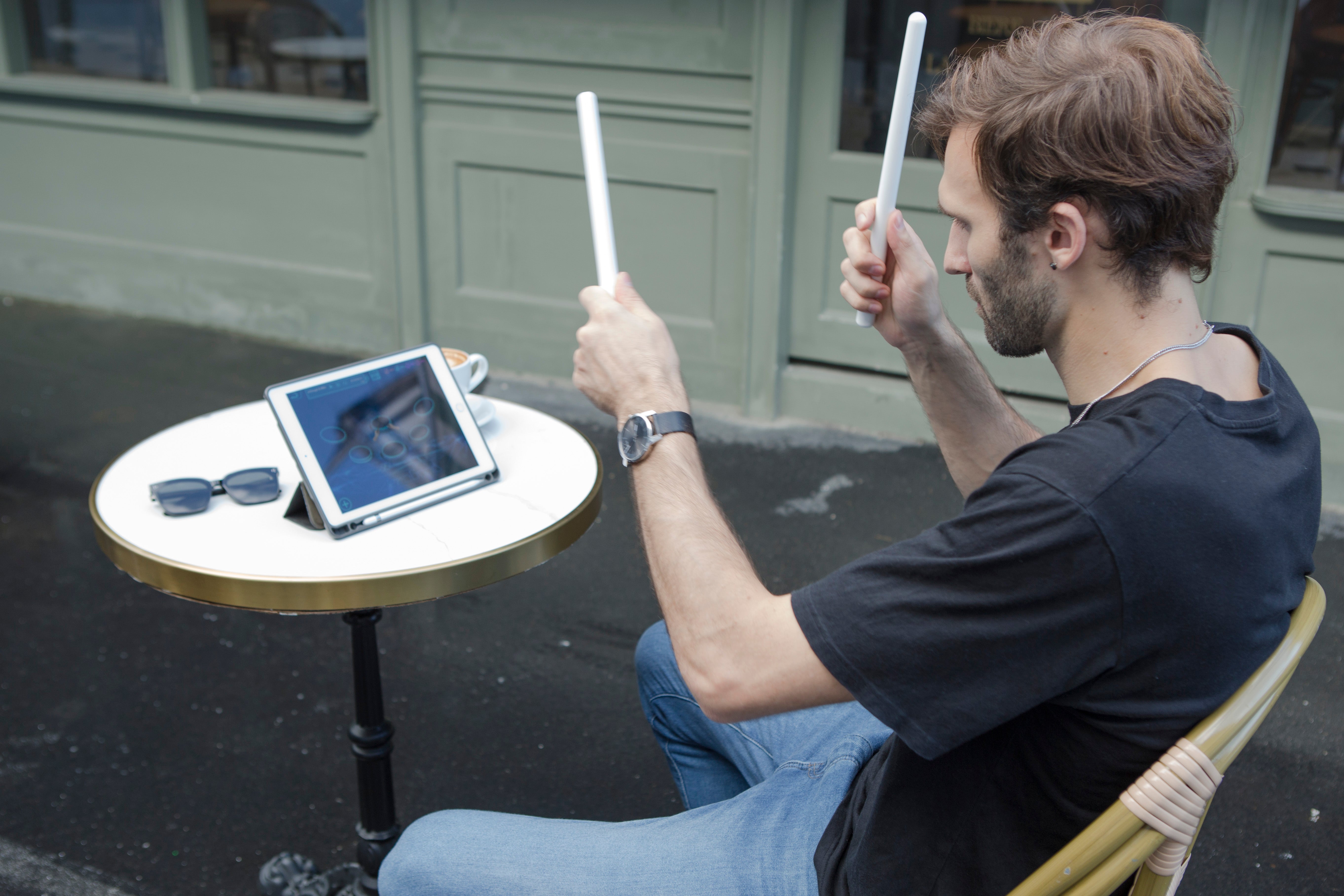
Limb independence is the holy grail of drumming. It is the ability to make your hands and feet perform different rhythms simultaneously and seamlessly. Many aspiring drummers believe they cannot practice this critical skill without sitting behind a massive set of drums. This is a myth. In fact, developing coordination away from the kit is often more effective because it forces you to focus purely on the mental aspect of the rhythm. This guide explores practical methods to master independence anywhere, whether you are saving up for an electronic drum kit or just away from your instrument.

Understand the Mental Block of Independence
Before moving your limbs, you must train your brain. Independence is not about muscle strength; it is about neural pathways. When you first try to tap a triplet with your right hand while tapping straight quarter notes with your left, your brain fights it. It naturally wants to synchronize your movements.
Overcoming this requires breaking the connection between your limbs. You are essentially teaching your brain to multitask. This cognitive work can be done while sitting on a bus, at your desk, or watching TV. You do not need the physical feedback of a drumhead to build these neural connections. Once the mental pattern is unlocked, transferring it to a portable drum kit later becomes incredibly easy.
Start with Simple Linear Exercises
The most effective way to begin is with linear drumming techniques, where no two limbs hit at the exact same time. This isolates each movement.
Sit at a table or use your thighs. Assign your right hand to count "1, 2, 3, 4." Assign your left hand to tap the "and" between the numbers. So the pattern is Right, Left, Right, Left. Count out loud: "One - And - Two - And."
Once you are comfortable, add your right foot. Tap your foot on the "1" and "3" while maintaining the hand pattern. This engages three limbs. By removing the complexity of a physical drum set, you can focus entirely on the timing. This simple tapping is the foundation of every groove you will ever play on a compact drum kit.
Incorporate the Grid System
The grid system is a powerful tool for independence. It involves keeping a steady ostinato patternwith three limbs while moving the fourth limb through different subdivisions.
Setting the Ostinato
Keep a steady beat. Tap your right hand on your thigh (simulating a hi-hat) playing eighth notes (1 & 2 & 3 & 4 &). Tap your left hand on "2" and "4" (simulating a snare). Tap your right foot on "1" and "3" (simulating a kick drum). Get this groove locked in until you can do it without thinking.
Shifting the Focus
Now, try to double the strokes with just your right hand while keeping the foot and left hand steady. Then switch. Try to play double strokes with your left hand while the right hand maintains the steady eighth notes. This forces your brain to isolate one limb's instruction while putting the others on autopilot. This is exactly how professional drummers practice on tour when they don't have access to their best digital drum kit.
Use Verbal Rhythms to Lead Your Limbs
Your voice is a "fifth limb." If you can say a rhythm, you can play it. Many beginners struggle because they cannot internalize how the two different rhythms interact.
Take a complex pattern, such as a single paradiddle (RLRR). Say the pattern out loud: "R - L - R - R." Now, tap your feet in a steady march (Right-Left-Right-Left) while tapping the paradiddle with your hands on your knees.
If you get confused, stop tapping and just speak the rhythm while marching your feet. "Right, Left, Right, Right." Syncing your voice to your hands bridges the gap between your brain and your muscles. This technique is invaluable when learning new styles like Latin or Jazz, which require high levels of independence that will eventually be played on an electronic drum kit.
Practice "Uncrossing" Your Brain
A common hurdle is the "sympathetic movement," where your left foot wants to do what your right hand is doing. To break this, you need cross-lateral exercises.
Tap your right hand on your left knee and your left hand on your right knee. Now, uncross them and tap your own knees. Alternate between crossed and uncrossed.
Add your feet. Tap your right foot when your hands are crossed, and your left foot when your hands are uncrossed. This creates a confusing physical sensation that forces your brain to concentrate hard on limb position. It is a fantastic mental workout that prepares you for the complex crossovers often required on a portable drum kit.
Utilize Visualization Techniques
Visualization is a proven practice method used by athletes and musicians. Studies show that imagining a movement fires the same neurons as actually performing it.
Close your eyes and picture yourself sitting at a drum set. Visualize your right hand playing the ride cymbal. Hear the "ping" sound in your head. Now visualize your left foot stepping on the hi-hat pedal on beats 2 and 4. Visualize your right foot playing a syncopated kick pattern.
Do not move your body. Just play the movie in your mind. If the mental movie "skips" or gets fuzzy, that is where your independence is weak. Replay that section mentally until it is clear. This mental rehearsal makes your actual practice time on a compact drum kit significantly more efficient.
Leverage Mobile Apps and Metronomes
You do not need hardware, but software helps. Download a simple metronome app. Practicing independence without a time reference can lead to sloppy habits.
Set the metronome to a slow tempo, like 60 BPM. Perform your limb tapping exercises to the click. The click acts as the "truth." If your foot lands slightly before the click, you know your coordination is off.
There are also specific "drum trainer" apps that display rhythms for you to tap along with on your phone screen. These turn independence practice into a game. You can plug in headphones and practice your timing on the train or in a library, making it the ultimate portable drum kit experience without carrying any gear.
Why You Eventually Need a Responsive Surface
While tapping on knees works for coordination, it does not build stick control. Eventually, you need to rebound. A practice pad is the standard solution, but if you want to apply your independence to actual drum sounds, technology offers great intermediate steps.
Many drummers transition from knee-tapping to a multipad or a tabletop drum unit. These are smaller than a full electronic drum kit but offer rubber pads that trigger sounds. They allow you to test if your independence holds up when you have to manage stick rebound and dynamic sensitivity. They fit on a desk, bridging the gap between mental practice and full-kit performance.
Create a Daily "No-Kit" Routine
Consistency trumps intensity. You do not need to practice for hours. Ten minutes of focused limb separation exercises daily will yield massive results.
Morning Routine
While brushing your teeth, march your feet in time (Left-Right-Left-Right) and brush in half-time. This separates your hand speed from your foot speed.
Commute Routine
While listening to music, tap the kick drum pattern with your right foot and the snare pattern with your left hand. Do not tap the hi-hat. Isolating just the shell voices forces you to listen critically to the song's structure.
Desk Routine
While working, type with your hands but keep a steady bossa nova ostinato with your feet. This disconnects your lower body from your upper body's focus. These micro-sessions add up, making you a better drummer before you even sit down at the best digital drum kit you can find.
Conclusion
Building limb independence is a mental game that requires patience and repetition, not heavy equipment. By using your body, your voice, and your mind, you can program complex rhythmic patterns deeply into your nervous system. These exercises allow you to improve constantly, regardless of your location. When you finally sit down at an electronic drum kit, you will find that the physical movements come naturally because the hard work has already been done in your head.
FAQs
Can I really learn to play drums without a drum kit?
You can learn rhythm, timing, and limb independence without a kit. However, you will eventually need a kit or a practice pad to learn stick control, rebound techniques, and cymbal dynamics. The mental skills transfer perfectly, but the physical touch requires an instrument.
How long does it take to develop limb independence?
It varies for everyone. With daily practice of 15-20 minutes, you can usually unlock basic 4-way coordination within a few months. Mastering complex independence for styles like Jazz or Afro-Cuban can take years of continuous practice.
Is an electronic drum kit better for practice than an acoustic one?
For independence practice, an electronic drum kit is often better because it allows you to control the volume. You can hear your own mistakes clearly through headphones without the overwhelming noise of acoustic drums. It also usually has a built-in metronome.
What is the best way to stop my left hand from copying my right hand?
Slow down. The "sympathetic movement" happens when your brain is overwhelmed. Reduce the tempo until you can perform the movements perfectly. Only speed up when the motions feel separate and controlled.
Do I need a full-size kit to practice foot technique?
No. You can buy a standalone kick drum practice pad. This is a small tower with a rubber pad that accommodates a kick pedal. It is a vital part of a compact drum kit setup for apartment dwellers who need to work on foot speed and independence quietly.


Share:
The Truth About Audio Lag and Why Drummers Need a Dedicated Adapter
How to Record Realistic Drum Tracks in a Small Home Studio